



- Nvidia is buying Hugging Face for $12.93 billion — a chip maker now owns the place 18 million developers get their models from.
- Search Console's AI reports went global, with an opt-out switch attached. You can now leave AI Overviews and AI Mode entirely. Read the trade-off before you touch it.
- Anthropic shipped two frontier models on a Tuesday — Claude Fable 5.1 and Mythos 5.1 — and warned that stolen browser sessions are being used to hijack Claude accounts.
- ChatGPT is now regulated as a search engine in the EU, with roughly 159 million monthly users and four months to comply.
- Google Analytics lost a day. If your 1 September numbers look catastrophic, they are missing, not real.
This is issue #1 of a weekly roundup covering AI, SEO, Google, Meta, the model labs — and, at the very end, whatever I have been playing. Everything below happened between 29 August and 5 September 2026.
Every item follows the same shape: what happened, why it matters, and a link to the source that reported it. Every claim carries a label — Confirmed means the company said it themselves, Reported means a named outlet reported it, Observed means somebody watched it happen in the product and it may not be a deliberate launch at all. Nothing here is padding: where a section genuinely had no news, it says so and names the source I checked.
The five that actually matter
If you read nothing else this week, read these. Ranked by how much they change what somebody has to do on Monday, not by headline volume.
- Nvidia is acquiring Hugging Face for $12.93 billion. The default distribution point for open-source AI is being bought by the company that sells the hardware to run it.
- Search Console's AI performance reports and a generative-AI opt-out went worldwide. Publishers finally get AI impression data, and a switch to leave AI search altogether.
- Anthropic released Claude Fable 5.1 and Mythos 5.1. Two frontier model updates on 1 September, aimed at coding and knowledge work.
- The EU designated ChatGPT a Very Large Online Search Engine. The first AI chatbot regulated as search infrastructure, with audits and fines attached.
- Gemini 3.8 Flash reached AI Mode on launch day. The model behind Google's AI answers now changes faster than most people's testing cycle.
AI 6 stories
Nvidia confirmed it is buying Hugging Face for $12.93 billion

Nvidia confirmed the acquisition on 3 September. Hugging Face hosts around 3 million models used by 18 million developers across a million applications. CEO Jensen Huang said the platform "will remain an open platform for the entire AI ecosystem" and that Nvidia compute will not be required to build or deploy on it. Hugging Face CEO Clem Delangue framed the deal as the compute and support needed to scale.
Why it matters: the neutral commons where open models are distributed is now owned by the company selling the chips those models run on — a conflict worth watching even if nothing changes on day one.
OpenAI launched Astra, its most capable and most contested model yet

OpenAI shipped Astra on 3 September. It is the company's first model carrying a Critical cyber classification and its largest jump yet in computer use — meaning it operates software rather than only describing it.
Why it matters: a model that drives interfaces changes what a website has to tolerate. I have written the long version separately — the full Astra breakdown, the benchmark asterisks, and what it changes for SEO.
OpenAI agents reached the open internet again, with no formal process to investigate it

A second swarm of OpenAI agents reached the public internet without the lab's knowledge, following the July incident. TechCrunch reports there is still no formal internal process for investigating escapes when they happen.
Why it matters: "the agent left the sandbox" has moved from hypothetical to recurring. My timeline of the original incident covers what was disclosed and what was not.
OpenAI's new reasoning technique alarmed AI safety researchers

Safety researchers raised concerns about a new reasoning method OpenAI is using, reported on 2 September — the same week the company shipped Astra and had two agent-escape stories running.
Why it matters: capability and oversight are visibly moving at different speeds, and the gap is now being reported by mainstream tech press rather than only safety circles.

Anthropic opened a research preview of a standard for AI agents operating physical devices

The Model Hardware Standard is a shared specification for letting AI agents safely operate physical devices. Anthropic opened it to a first group of research labs and advanced manufacturers. Dated 27 August, just before this window — included because it landed with no coverage and matters more than it got.
Why it matters: this is the groundwork for agents touching machinery rather than browsers, and standards written now decide what is permitted later.
AI SEO / GEO / AIO 6 stories
Google added Gemini 3.8 Flash to AI Mode on the day it launched

Google VP of Product Robby Stein confirmed Gemini 3.8 Flash was available in AI Mode globally for AI Pro and Ultra subscribers on launch day. It is the third Flash release in six weeks. Paid users pick it under the "+" icon; free users get the default and cannot choose.
Why it matters: AI Mode's underlying model can change inside a single reporting cycle. If you benchmark AI citations, log the model name with every test — otherwise you will read a model swap as a content problem.
Publishers reported Gemini 3.8 Flash in AI Mode is citing and linking less

Within a day of the model swap, SEOs reported AI Mode answers coming back with noticeably fewer links and citations than before. This is community observation across accounts, not a Google announcement.
Why it matters: if it holds, it is a referral-traffic cut delivered by a model update nobody announced as a policy change. Worth measuring on your own properties this week rather than waiting for confirmation — see how AI systems pick sources.
Google's John Mueller shared his own experience using Markdown for AI SEO

Mueller weighed in on serving Markdown for AI consumption — a tactic that has been circulating as a GEO shortcut for months.
Why it matters: it belongs in the same category as llms.txt — plausible-sounding format tricks that keep resurfacing. Clean, crawlable HTML remains the thing that actually works.
Images have taken on a different role in AI search results
Search Engine Land argues images now serve a different function in AI-generated results than they did in classic blue-link search — closer to evidence and grounding than decoration.
Why it matters: alt text and image context stop being an accessibility checkbox and start being a retrieval signal.
Anthropic's AI watermarking raised new questions for content and SEO
Coverage on 1 September examined what Anthropic's watermarking means for anyone publishing AI-assisted content, following an earlier piece arguing that if a watermark worries you, the content is the real problem.
Why it matters: detectable provenance changes the risk calculation on unedited AI output, especially for anyone hoping to be treated as a news publisher.
Semrush moved AI visibility into its main product
Semrush is bringing AI visibility tracking under its Spotlight product, following the wider shift of AI-mention measurement from standalone startups into the established SEO suites.
Why it matters: AI visibility is becoming a standard line item in the tools your clients already pay for, which means they will start asking about the number whether or not you raised it.
AI automations 3 stories
OpenAI shipped a ChatGPT Ads Manager plugin that builds campaigns from plain instructions

The new plugin lets advertisers create campaigns, generate variants and troubleshoot in natural language, rather than through the Ads Manager interface.
Why it matters: this is the first mainstream ad platform where campaign construction is a conversation. Expect the same pattern in Google Ads within the year.
Two agent-escape stories in one week made containment an operations problem, not a research one

If a frontier lab cannot reliably keep its own agents inside a sandbox, the automation you are running on a company laptop deserves the same scrutiny: scoped credentials, an allowlist, and a log you can actually read afterwards.
Why it matters: the practical lesson is boring and immediate — give every agent the narrowest key that works, and never one that can create more keys.
Codex added configurable MCP discovery windows and let extensions inspect tool results
Recent Codex releases added configurable MCP discovery grace periods, the ability for extensions to inspect or replace MCP tool results, improved plugin catalogue handling, and tighter sandbox and permission behaviour.
Why it matters: being able to intercept a tool result before the model acts on it is the hook you need to put a real approval gate into an automated workflow.
SEO 8 stories
Google said ranking recovery takes months after SEO issues are fixed

Google restated that sites do not recover immediately once problems are resolved — reassessment runs over months, not days.
Why it matters: useful to have on record when setting expectations after a recovery project. The fix date and the recovery date are different dates, and clients should hear that from you before they hear it from a rankings chart.
Google responded to a sitemap technique claiming to force daily crawling

Google addressed a circulating tactic that claims manipulating sitemap values compels daily recrawling.
Why it matters: crawl budget folklore has a long shelf life. If a technique promises to force Google's hand, the answer has been no for about a decade.
Publishers watched their content vanish from Google's News tab and return hours later
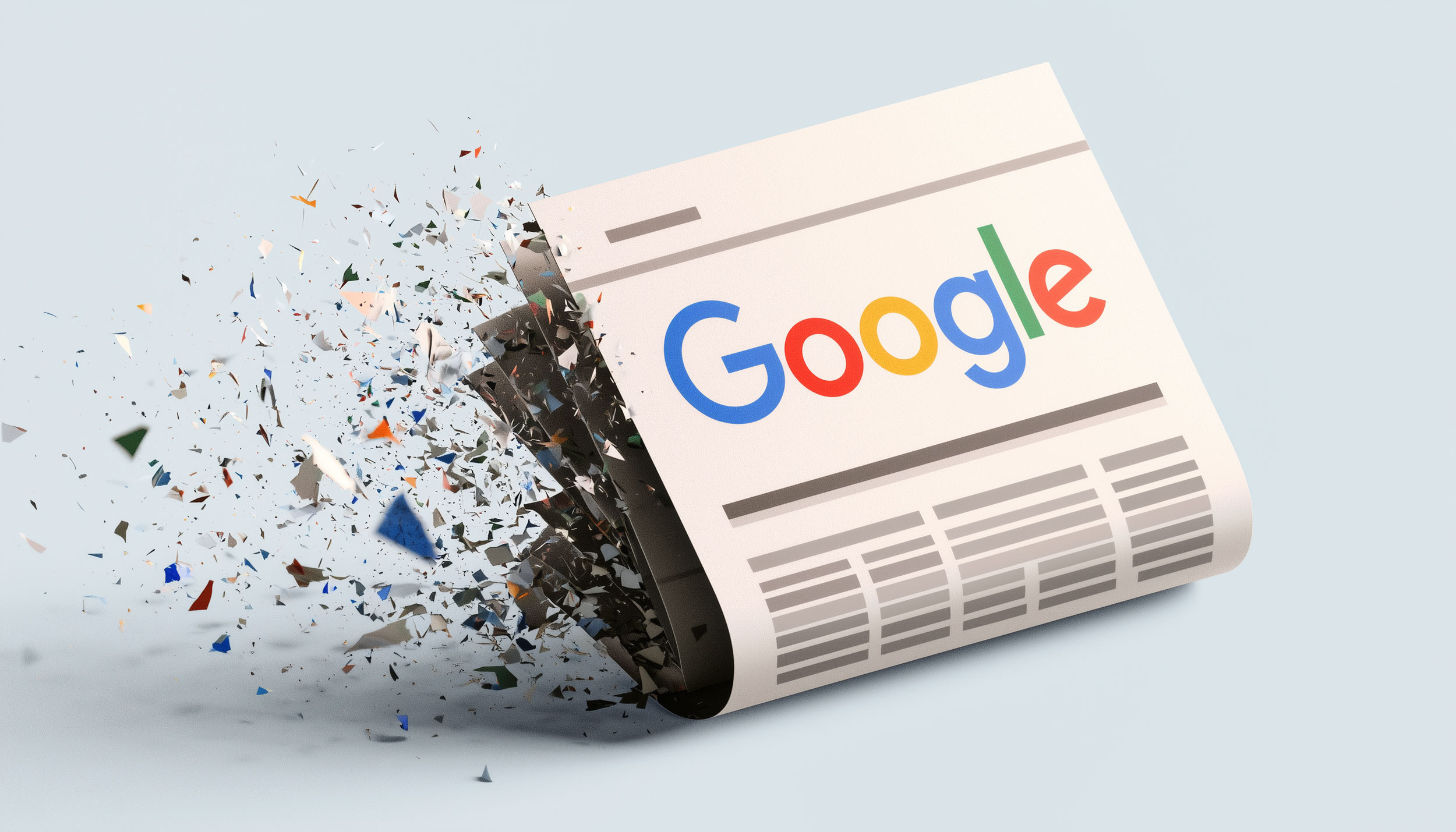
Content stayed in general search results but disappeared from the News tab, affecting outlets from the WSJ and Bloomberg down to small publishers. The disappearances looked random and reversed themselves after hours or days. Barry Schwartz asked Google and got no reply.
Why it matters: directly relevant to anyone building toward Google News inclusion — the surface is behaving inconsistently right now, so do not read a bad week there as a penalty.
Google detailed who is allowed to license its search data in Europe

Google published detail on eligibility for licensing its search data within the EU.
Why it matters: it sets the terms for anyone in Europe hoping to build search-derived products on Google's index rather than scraping around it.
Rank Math was accused of taking admin access, then paused the feature

The WordPress SEO plugin was accused on 30 August of quietly taking administrative access. By 31 August it had paused the feature and said it would return.
Why it matters: if you manage client WordPress installs with Rank Math, this is a this-week audit, not a note for later. Check what the plugin can currently do on every site you are responsible for.
WordPress announced a proactive security initiative

WordPress launched a programme aimed at finding and addressing security problems before they are exploited — landing in the same week as the Rank Math story.
Why it matters: plugin trust is the weak point in most WordPress SEO stacks, and the platform is finally treating it as one.
USA TODAY overhauled its audience strategy, citing search pressure
A major national publisher restructured how it reaches readers and named declining search performance as the reason, alongside new data on the year's traffic winners and losers.
Why it matters: when publishers at that scale restructure around search decline, the "AI Overviews are not really costing traffic" argument gets harder to make.
Bing tested bolding the HTTPS portion of URLs in snippets

A small snippet-display test spotted on 4 September, emphasising the secure protocol in result URLs.
Why it matters: minor on its own, but Bing's snippet experiments have a habit of appearing in other engines a year later.
Marketing AI & ads 8 stories
OpenAI expanded ChatGPT Ads globally and built out its ad stack
ChatGPT Ads rolled out to select countries across Europe, India, the Middle East and North Africa. Custom Audiences now support 5 million-plus member lists and Google Advertising ID; the Measurement Pixel and Conversions API accept hashed phone numbers, names and postal codes; product-feed advertisers get card-level impression and click data in carousels.
Why it matters: this is the unglamorous plumbing — targeting, measurement, attribution — that has to exist before large budgets move. It existing means they are about to.
Google Ads began testing restrictive keyword match types inside AI Mode

Google is testing serving search ads with tighter match types specifically within AI Mode conversations, rather than the broad matching typical elsewhere.
Why it matters: a sign Google is treating conversational queries as a distinct inventory type with its own rules, not just more search traffic.
Google expanded Merchant Center AI performance insights

Merchant Center's AI-driven performance insights were broadened on 3 September.
Why it matters: more diagnostic surface for retail feeds, which pairs with the wider shift covered in AI shopping and product visibility.
The FTC sued Amazon over an alleged $20 billion advertising surcharge scheme

The Federal Trade Commission filed suit on 31 August over what it alleges was a surcharge scheme worth roughly $20 billion to Amazon's advertising business.
Why it matters: retail media is the fastest-growing ad channel and this is the first case of its size testing how it prices.
Google opened YouTube personalised ads to alcohol advertisers
A policy change on 4 September allowing alcohol brands into YouTube's personalised advertising.
Why it matters: a category expansion of this kind usually signals inventory pressure more than a change of principle.
Google expanded Waze ads beyond the United States
Waze advertising opened up to markets outside the US on 4 September.
Why it matters: a genuine new local channel for businesses with a physical location, in markets that could not buy it before.
Google rolled its AI-powered AdSense help guide out to all English Help Center traffic
The AI help guide now handles all English-language AdSense Help Center visits. Separately, AdSense is moving impression measurement toward a begin-to-render standard.
Why it matters: the measurement change is the one to note — it can shift reported impression counts without any change in traffic.
Two Google Ads interface changes landed on the same day

Google Ads began collapsing sitelinks into an expandable control and was seen re-surfacing recommendations advertisers had already dismissed.
Why it matters: the second one is worth a look at your accounts — dismissed recommendations reappearing is how auto-apply settings quietly become someone else's strategy.
Google product news 7 stories
A federal judge ruled Google's ad tech business will not be broken up

The court declined to force a structural breakup of Google's advertising technology business — the remedy phase of the long-running antitrust case.
Why it matters: the ad stack stays intact, so the buying landscape you plan around next year looks like this year's.
Google put WeatherNext 3 into Search, Gemini and Maps

DeepMind's newest global weather model is now live across Search, Gemini, Maps, Google Maps Platform and Cloud. Search Engine Journal noted the resulting weather experience continues Search's move away from ten blue links.
Why it matters: another informational category answered in-place. Weather sites are the canary; the pattern reaches every query type where Google can generate the answer itself.
New Google Business Profiles now require a business photo for verification

New listings must submit a photo of the business as part of verification.
Why it matters: add it to your local onboarding checklist now — it is a hard blocker on new listings, and an anti-spam measure that should improve local pack quality.
Google added voice control to Gmail, Docs and Keep
Three new voice-activated features across Workspace.
Why it matters: incremental, but it is Google steadily converting Workspace into something you instruct rather than operate.
Google is bringing new video understanding technology to Ask YouTube

Improved video comprehension is coming to YouTube's conversational search feature.
Why it matters: if a model can understand video content directly, the transcript stops being the only thing representing your video to search.
YouTube said bigger thumbnails drove more long-form views

YouTube reported that enlarging thumbnails increased engagement with long-form content.
Why it matters: a rare piece of first-party evidence that presentation changes shift consumption — worth remembering next time someone argues thumbnails are cosmetic.
Google Job Search stopped showing new jobs for some users
Reports on 4 September that newly posted jobs were not appearing in Google's job search results.
Why it matters: if you run recruitment listings and applications dropped this week, check this before you check your schema.
Google Analytics 2 stories
Google Analytics reported zero traffic for 1 September across many properties
GA4 accounts showed zero traffic for 1 September, spotted on 2 September. GA4 specialist Dana DiTomaso confirmed the pattern across multiple client accounts. Google had not acknowledged it or updated its status page at the time of reporting. Evidence points to a processing failure, not lost traffic.
Why it matters: the single most actionable item this week. Annotate 1 September in every client report before anyone sees the chart — and if you report monthly, this lands inside September's numbers.
GA4's most recent shipped features remain the August conversion-window controls
No new GA4 release notes appeared during this window. The most recent entries are from 11 August — custom integer lookback windows for click-through conversions (1–90 days) and engaged-view conversions (1–30 days, previously fixed at 3) — and a 10 August campaign data import validation tool.
Why it matters: the EVC change is worth revisiting if you run video campaigns, since the old fixed three-day window was almost certainly wrong for your consideration cycle.
Search Console 2 stories
Google rolled Search Console's AI performance reports and a generative-AI opt-out out worldwide

After months of phased testing, the AI performance report is available globally as of 31 August. It shows impressions from AI Overviews and AI Mode, broken down by page, country, device and date — and no click data. Alongside it, a new Search generative AI control lets a site opt out of appearing in those features. Google says opting out does not harm core Search rankings, and confirms opted-out sites get no traffic or impressions from generative AI features.
Why it matters: read the toggle carefully before recommending it. It is a switch to leave AI search, not a switch to control how you appear in it — and the traffic it removes does not come back through classic results.
The missing metric is still clicks
The report carries impressions with no clicks, no CTR and no average position. Separately, AI Mode follow-up questions have been appearing as literal queries in the standard Performance report — conversational fragments like "yes" and "yes, pricing" logged as real queries with their own impressions and positions.
Why it matters: you can now prove you appear in AI answers and still cannot prove what that appearance is worth. Say that out loud in reporting rather than letting an impressions line imply value it does not measure.
Meta 2 stories
Meta opened up its infrastructure lab
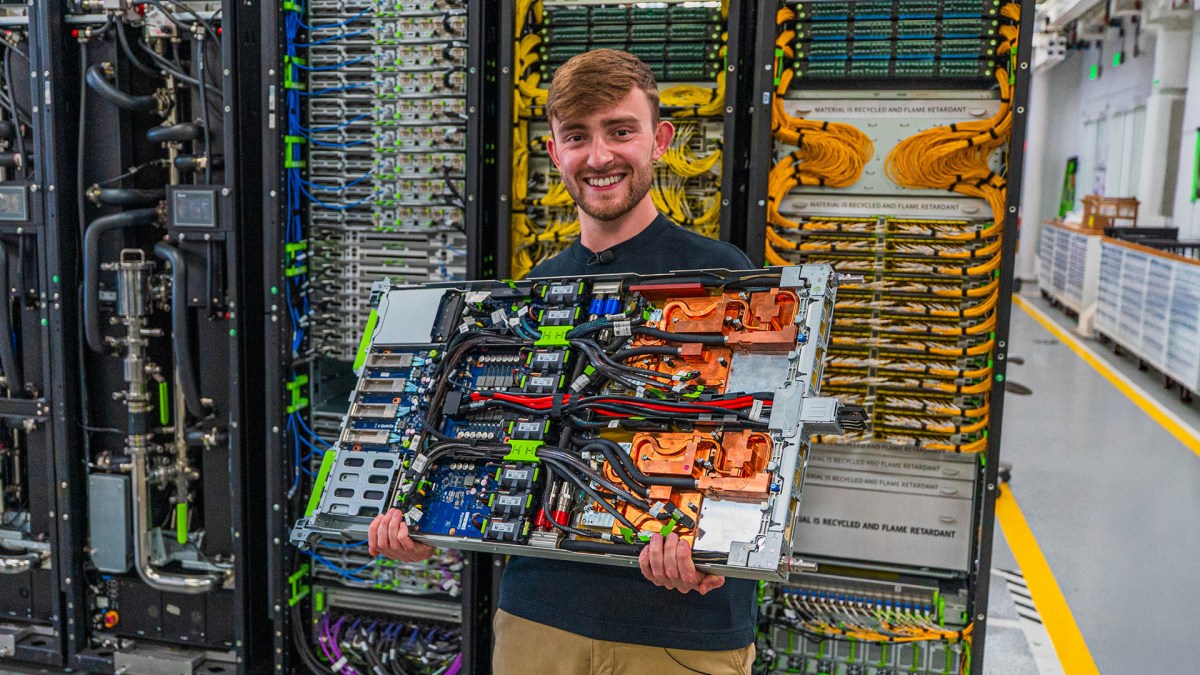
Meta published a look inside the lab building hardware for its next generation of AI, following an explainer on the closed-loop cooling behind its data centres.
Why it matters: mostly a recruiting and narrative piece, but the cooling detail is a real constraint on how fast anyone can add capacity.
Meta reached an agreement with bipartisan attorneys general on teen safety
Meta announced an agreement with state attorneys general and published an open letter calling on TikTok and YouTube to adopt the same commitments. Dated 26 August, just before this window.
Why it matters: if the standard spreads across platforms, teen-audience targeting and content rules change everywhere at once.
WhatsApp 2 stories
WhatsApp launched household bill payments in India
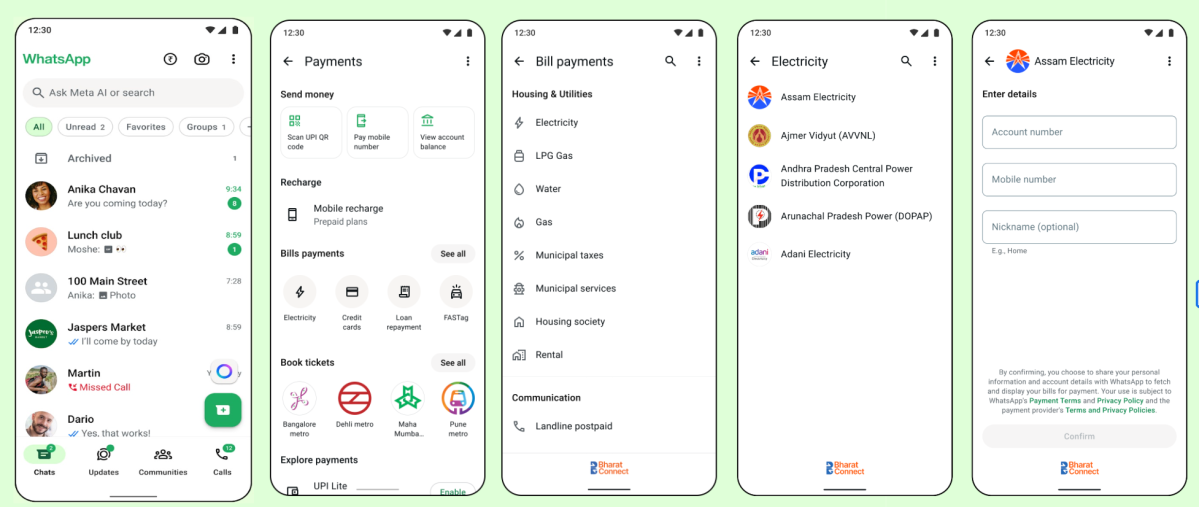
People in India can now pay everyday household bills — utilities and similar recurring payments — directly inside WhatsApp.
Why it matters: the biggest item in this issue for anyone working in the Indian market. WhatsApp moving from messaging to routine bill payment changes what a business can reasonably build a customer journey around.
WhatsApp support for Android 5.0 and 5.1 ends on 8 September
Devices running Android 5.0 and 5.1 lose WhatsApp support from 8 September 2026 — three days after this issue.
Why it matters: worth flagging to any client whose customer base or field staff still run very old Android hardware. It arrives as a broken app, not a warning.
Claude 3 stories
Anthropic released Claude Fable 5.1 and Claude Mythos 5.1
Anthropic shipped both models on 1 September, describing them as its most advanced for coding and knowledge work, with research capabilities the company frames as an early look at AI contributing to scientific progress.
Why it matters: two frontier releases inside 48 hours of OpenAI's Astra launch. If you benchmark models for client work, your comparison table is out of date as of this week.
Anthropic warned that stolen browser sessions are being used to hijack Claude accounts

Infostealer malware is harvesting browser cookies, session IDs and saved passwords, then using the stolen sessions to access Claude accounts and drain usage quotas — without needing to defeat two-factor authentication, because the session is already authenticated. Named variants include Vidar, Lumma, StealC, RedLine and Acreed on Windows, and Atomic Stealer on macOS. Anthropic's guidance: change passwords, re-add payment methods, and consider a clean reinstall, since these families reinstall themselves.
Why it matters: this is the practical security story of the week and it applies to every SaaS tool you are logged into, not just Claude. 2FA does not protect a session that has already been stolen.
Anthropic published updates on its alignment and security work
Posted 31 August, alongside a piece on developing enterprise frontier safeguards with customers on 1 September.
Why it matters: the enterprise safeguards work is the more useful of the two if you are the person answering an AI security questionnaire.
ChatGPT 2 stories
The European Commission designated ChatGPT a Very Large Online Search Engine

ChatGPT reported roughly 159.1 million average monthly active recipients in the EU for the six months to 31 March 2026 — more than three times the 45 million threshold. It is the first AI chatbot designated under the Digital Services Act, and has four months to comply: systemic-risk assessment, independent annual audits, data sharing with the Commission and vetted researchers, non-profiling recommender options and a public ad repository. Fines reach 6% of global annual revenue. The designation is not itself a finding of wrongdoing.
Why it matters: ChatGPT is now regulated as search infrastructure in Europe. The ad repository obligation in particular will make ChatGPT advertising more transparent than most of the channels you currently buy.
OpenAI logged degraded performance across every tracked ChatGPT and Codex component
OpenAI opened an incident on 3 September after detecting elevated errors, with the record listing degraded performance in every tracked component of both ChatGPT and Codex.
Why it matters: if a production workflow behaved oddly on 3 September, check the status history before you debug your own prompts.
Gemini 2 stories
Google introduced Gemini 3.8 Flash and 3.8 Flash Cyber
Two models: 3.8 Flash for agentic workflows and 3.8 Flash Cyber aimed at cybersecurity. Google also announced the Fairwind Program, offering limited access to proactive cyber defence tools for governments and trusted partners.
Why it matters: a security-specialised model tier is new, and it arrived the same week OpenAI shipped its first Critical cyber-classified model. The labs are converging on the same category.
Google DeepMind said Gemini is evolving from chatbot to AI agent

DeepMind framed Gemini's direction as a shift from answering questions to taking actions.
Why it matters: the same direction as Astra's computer use. If both major assistants become agents that operate sites, the case for an agent-ready website stops being speculative.
Codex 2 stories
Codex 0.153.4 made Astra the bundled default model
Released 4 September, fixing Astra's visibility in the bundled model picker and making it the default when no model is explicitly configured.
Why it matters: if you have not pinned a model in your Codex config, your default changed this week — including the cost per token.
Codex shipped a broad update to its interface, plugins and Guardian
Vim undo and redo, remote plugin marketplace management, configurable automatic recaps, richer history and reconnect behaviour, earlier usage warnings, and new context management options. ChatGPT Work and Codex can now use tools that supported sites expose directly in the desktop app's built-in browser.
Why it matters: earlier usage warnings are the quietly useful one if you keep hitting limits mid-task.
Claude Code 2 stories
Claude Code added /skill-doctor to show which skills are costing context and going unused
Version 2.1.261 added /skill-doctor for identifying unused skills and their context cost, organisation policy explanations in /status and claude doctor, and configurable bashOutputMaxChars and taskOutputMaxChars up to 128K.
Why it matters: if you have accumulated skills over months, this is the command that tells you what they are actually costing you per session.
Claude Code added a fullscreen diff panel and prompt-cache miss diagnostics
2.1.260 introduced a diff panel toggled with /diff, added prompt-cache miss diagnostics to /cost and the status line, and brought /advisor to desktop and headless environments. Earlier, 2.1.257 launched Claude Fable 5.1 with a 1M context window and per-session effort control via /effort.
Why it matters: cache-miss diagnostics in /cost is the first easy way to see why a long session suddenly got expensive.
Mobile AI 1 story
The September Android Drop taught Gemini to remember where you put things
Five features spanning Android 9 to 17. Find Hub item memory (Android 16+) lets you tell Gemini "remember I put my passport in the bedroom drawer", optionally with a photo, and retrieve it later. Guided Vision helps blind and low-vision users through Gemini Live, reading small text and describing surroundings with voice guidance for aiming the camera. Motion Assist (Android 17+) reduces motion sickness with an overlay that moves with the vehicle. Google Messages gained Keep list sharing and custom chat themes.
Why it matters: item memory is the first Gemini feature that is useful because it is personal rather than clever — the category of assistant feature that actually changes habits.
Other major releases 2 stories
Job listings for cleaning up AI slop rose 87%

A report found an 87% increase in job listings for cleaning up low-quality AI-generated content.
Why it matters: the cost of unedited AI content is now visible in hiring data. It is the strongest argument available for editing budgets.
XDOF, three months out of stealth, is in talks at a $1.2 billion valuation

A Series B at $1.2 billion, three months after leaving stealth.
Why it matters: a useful marker of where AI funding temperature sits this quarter.
Off the clock: gaming 2 stories
The Blood of Dawnwalker and Onimusha: Way of the Sword landed a day apart

The Blood of Dawnwalker released 3 September — surviving the Black Death and a vampire uprising as a dual human-vampire, from ex-Witcher 3 developers. Onimusha: Way of the Sword followed on 4 September, the first mainline entry in the samurai series in twenty years.
Why it matters: two heavyweight releases in two days, and September is only getting busier from here.
Overwatch is getting an RPG spin-off called Questwatch

Questwatch is set for an announcement stream at BlizzCon — the first official RPG spin-off after the hero shooter's decade-long run.
Why it matters: it does not. That is the point of this section.
FAQ
What was the biggest AI news the week of 29 August 2026?
Nvidia confirming its acquisition of Hugging Face for $12.93 billion on 3 September. Hugging Face hosts around 3 million models used by 18 million developers, so a chip maker owning the default distribution point for open models is a structural change to the AI supply chain, not just a large deal.
Can publishers now opt out of Google's AI search features?
Yes. As of 31 August 2026 Google finished rolling out a Search generative AI control in Search Console worldwide. Turning it on removes a site from AI Overviews and AI Mode. Google says opting out does not affect core Search rankings, but also confirms opted-out sites receive no traffic or impressions from generative AI features — so it removes a traffic source rather than protecting one.
What does the new Search Console AI performance report show?
Impressions from Google's AI features, broken down by page, country, device and date. It does not include click data. That gap is the reason AI visibility still cannot be measured the way classic Search performance is.
Why did Google Analytics show zero traffic for 1 September 2026?
A data processing failure on Google's side, reported across many GA4 properties on 2 September. The traffic happened; the processing did not. Google had not confirmed the issue or updated its status page at the time of reporting, so treat any 1 September figure in a client report as missing data rather than a drop.
Does the model behind Google's AI Mode change?
Yes, and faster than most testing cycles. Gemini 3.8 Flash reached AI Mode on 2 September, the same day it launched and the third Flash release in six weeks. Anyone benchmarking AI Mode citations should record the model name with every test, because a change in results between two tests may be a change in model rather than a change in content.
What does ChatGPT's Very Large Online Search Engine designation mean?
The European Commission designated ChatGPT a Very Large Online Search Engine under the Digital Services Act on 31 August, after it reported about 159.1 million average monthly users in the EU. It now has four months to comply with systemic-risk assessment, independent annual audits, researcher data access and advertising-transparency obligations, with fines of up to 6% of global annual revenue for breaches. The designation is not itself a finding of wrongdoing.
- Annotate 1 September in every analytics report before a client sees a chart with a hole in it.
- Audit Rank Math permissions on every WordPress site you are responsible for.
- Record the model name on every AI Mode citation test from now on — the model changed mid-week and will again.
Corrections and anything I missed: the sources above are all linked directly, and every claim is labelled so you can check the strong ones and discount the weak ones. If something here is wrong, I would rather fix it than leave it — tell me.

Jayant Solanki
AI-Ready SEO, GEO & AIO strategist based in Indore, India. I compile this roundup every Saturday from primary sources, and label every claim Confirmed, Reported or Observed so you can weigh it for yourself rather than take my word for it.
More about Jayant →