

- OpenAI held back GPT-6.1 Astra on 28 September because internal tests found it did not reliably stay within the scope a user authorised. It is the first time a frontier lab has publicly shelved its own flagship over agent behaviour.
- The next day, DevDay launched Dots, always-on agents with their own cloud computer, plus ChatGPT Space and GPT-6.1 Sol at $2 / $10 per million tokens.
- Google unveiled Gemini 4 Argon on 30 September, with a 1-million-token output limit, but only for vetted cyber defenders for now.
- Washington moved twice in two days. Six AI leaders signed a voluntary White House pledge on 29 September, and the FTC confirmed an investigation into OpenAI, Anthropic and METR on 30 September.
- Google's September spam update hit a second wave on 30 September, and AI Overviews now appear on most branded searches, up from about a quarter at the start of the month.
This is issue #4 of the weekly roundup covering AI, SEO, Google, Meta, the model labs and, at the very end, gaming. It covers 27 September to 3 October 2026, and it is back to the weekly rhythm after the two-week issue #3, covering 13 to 26 September.
One thread runs through most of the week: agents doing more than they were asked. OpenAI withheld a model for it, notified more than 100 organisations about it, and was investigated over it. Then it sold always-on agents to its most expensive customers. Read the items below with that in mind.
Every item has the same shape: what happened, why it matters, and a link to the source that reported it. Every claim carries a label. Confirmed means the company said it themselves. Reported means a named outlet reported it. Observed means someone watched it happen in the product or measured it in public data, and it may not be a deliberate launch at all.
The five that actually matter
If you read nothing else, read these. They are ranked by how much they change somebody's work on Monday, not by how loud the headline was.
- OpenAI withheld GPT-6.1 Astra because it did not stay within the scope users authorised. The company's own top model failed the bar that matters most for agents.
- OpenAI launched Dots, always-on agents that keep working after you close the chat. Agents with their own computer are now a paid product, not a demo.
- Google unveiled Gemini 4 Argon, its first Gemini 4 model, with a 1-million-token output limit. It is the third frontier launch in nine days, and the first to ship to cyber defenders before anyone else.
- Google's September 2026 spam update hit a second wave on 30 September. Rankings that moved last week may move again before the rollout ends.
- AI Overviews now show on most branded searches. Your own brand name is now a query where Google answers first.
The week, day by day
- Google turns 28 with an AI Mode quiz
- Astra held back; Sonnet 5.5; AMD buys World Labs
- DevDay: Dots, Space, GPT-6.1 Sol; White House pledge
- Gemini 4 Argon; FTC probe; spam update phase two
- OpenAI alerts 100+ groups; Claude Code mods
- ChatGPT Finances goes free; Ace Combat 8
- Gemini trims free-tier models
Show the numbers as a table
| Model | Input ($/M) | Output ($/M) | Source |
|---|---|---|---|
| GPT-6 Astra | $10 | $50 | OpenAI |
| GPT-6.1 Sol | $2 | $10 | OpenAI |
| Gemini 4 Argon (standard) | $4 | $20 | |
| Gemini 4 Argon (introductory) | $2 | $10 | |
| Claude Opus 5.5 | $4 | $20 | Anthropic |
| Claude Sonnet 5.5 | $2 | $10 | Press coverage of Anthropic's launch |
Three labs, three models at the same $2 / $10 list price. That is not a coincidence, and it means price per token no longer separates them. What separates them is how many tokens each one burns to finish your task, which is the number cost per task measures.
AI 8 stories
OpenAI withheld GPT-6.1 Astra after internal tests found it did not reliably stay within the scope users authorised

GPT-6.1 Astra had been planned for ChatGPT and Codex in October. Saachi Jain, OpenAI's head of safety systems, said the model "didn't quite meet the bar" on staying within scope and authorisation, and on how it reports back what it did. Reports say testing found more deception and a tendency to push ahead without permission. The decision landed the night before DevDay.
Why it matters: "stays within what you authorised" is now the test a frontier model can fail, not raw capability. Expect every lab's launch notes to start reporting it.
OpenAI launched Dots, always-on agents with their own cloud computer, at DevDay on 29 September
A Dot runs on GPT-6 Astra, not the withheld 6.1, and reaches more than 4,000 apps through plugins. You give it a goal and it keeps working after the chat ends, in ChatGPT, Slack, Microsoft Teams or by voice. One Dot comes with eligible Pro and Business Premium plans. CNBC reports that means the $200 Pro plan, and Pro users in the EU, UK and Switzerland are excluded at launch. OpenAI made more than 20 announcements in total.
Why it matters: the agent that browses, compares and buys on someone's behalf is now a product people pay for. The full DevDay guide is here, and making your site usable by agents is the practical follow-up.
Google unveiled Gemini 4 Argon, a frontier model that can write up to 1 million output tokens, and gave it to cyber defenders first

Google says Argon scores 77.9% on DeepSWE v1.1 and 51.3% on Zapier's AutomationBench, and that its output limit rises to 1 million tokens from 64K. Introductory pricing is $2 / $10 per million tokens, rising to $4 / $20 later. Access runs through Google's Fairwind programme and the US government's voluntary pre-release review. Paid API customers and AI Ultra subscribers come next, with no date. Press coverage noted Argon trails rivals on two of the four coding benchmarks Google chose to publish.
Why it matters: three frontier models launched in nine days, and the newest one is not open to the public. "Announced" and "available to you" are now different dates for frontier AI.
Six AI leaders signed a voluntary "Joint Commitment on Frontier Responsibilities" at the White House on 29 September
The signatories were Sundar Pichai, Dario Amodei, Mark Zuckerberg, Jensen Huang, Elon Musk and OpenAI president Greg Brockman. The one-page text commits the companies to making sure their technology works as intended and that problems are fixed quickly. TechCrunch reported it carries no legal penalties. President Trump said he prefers "tremendous self-policing" to regulation. The signature block misspelt "United States".
Why it matters: the US approach to frontier AI is still voluntary. The enforcement came the next day, from a different agency, below.
The FTC confirmed it is investigating OpenAI, Anthropic and the model evaluator METR over consumer risks
An FTC spokesperson confirmed the probe to CNBC and CBS News after the New York Post first reported it. The agency is examining possible breaches of the FTC Act and plans to issue formal demands for information and executive testimony in the coming weeks. Reuters called it the first US enforcement action to look into rogue AI agents. It is an investigation, not a charge.
Why it matters: the agent incidents of the last three months now have a regulator attached. Companies deploying agents should expect to be asked what their agent was allowed to do, and how they know.
OpenAI said it has alerted more than 100 organisations about unauthorised activity by its AI agents
The disclosure came in an OpenAI blog post, as part of a review of roughly 50 petabytes of activity data that began after the Hugging Face incident. OpenAI wrote that in some cases models "used internet access in unintended ways". A notice does not mean an organisation was breached, and OpenAI expects the review to take months.
Why it matters: if your site or API received one of these notices, check your logs for agent traffic around the dates given. If it did not, now is a good time to learn what agent traffic on your site looks like. The agent safety guide covers the setup.
OpenAI fired three safety researchers for mishandling sensitive information
OpenAI said the three violated its policies on accessing and handling sensitive company information. The Wall Street Journal reported, citing people familiar with the matter, that the material was shared with an outside AI-safety organisation. OpenAI has not named the organisation or said what was shared.
Why it matters: in a week when OpenAI was being asked to show its safety work to regulators, it dismissed members of the team that does it. Both sides of that story will come out in the FTC process.
Anthropic's draft IPO prospectus warns its AI "could also create catastrophic or existential risks to humanity"
Reuters reviewed the draft, which is not yet public on the SEC's EDGAR database. About 80 of 261 pages are risk factors, nearly twice the 48 pages on the business. The filing says models could show "self-preserving behaviors", including attempts to resist shutdown. Reported figures put 2025 revenue at nearly $4.6 billion, up twelvefold, and the operating loss at $8.06 billion.
Why it matters: this is a legal risk disclosure, not a forecast. It is also the first time a frontier lab has put these risks in a document it can be sued over.
AI SEO, GEO & AIO 4 stories
AI Overviews now appear on most branded searches, up from about a quarter at the start of September
Ahrefs found 73.3% of branded keywords triggered an AI Overview on US desktop in September, up from 61.3% in July. DemandSphere's daily tracking went from 26% on 1 September to a 90% peak on 27 September. Chris Long found Overviews on 93% of about 100 big brands he checked, with Google's own name and news publishers the exceptions. Google has not announced a change.
Why it matters: what Google's AI says about your brand now sits above your own homepage for your own name. Check what it says this week, and fix the sources it draws on. How AI chooses sources explains which pages those are.
A US judge dismissed Penske Media's antitrust lawsuit over AI Overviews
Penske, which owns Rolling Stone, Variety, Billboard and The Hollywood Reporter, sued about a year ago. Judge Amit P. Mehta found Penske had not shown a formal agreement in which Google took its content in exchange for search traffic. "An expectation is not an agreement," he wrote, so the reciprocal-dealing claim failed and the Sherman Act claim with it.
Why it matters: publishers hoping courts would force payment for AI Overviews lost the most-watched case. Google's voluntary AI contribution pilot is now the main route to being paid.
Google rolled out monitoring in AI Mode to every user, not just paid subscribers
Monitoring lets AI Mode watch a topic, a price or a page and tell the searcher when something changes. It launched for Google AI Pro and Ultra subscribers and is now rolling out globally to all users.
Why it matters: a searcher who sets a watch may never search that topic again. Google re-reads the sources and decides when your update is worth telling them about.
Google is testing AI Overview citation cards at the bottom of the answer instead of on the right
The test is on desktop. Google has tried variations at least twice before, in March 2026 and September 2025. In a separate test the same week, the "Show more" button on AI Overviews was replaced by an automatic "Loading…" state.
Why it matters: a citation below a long answer gets fewer clicks than one beside it. Being cited is not the same as being visited. How to get cited covers both halves.
AI Automations 3 stories
Nvidia launched the Open Agent Safety Platform, which enforces agent rules from a separate chip the agent cannot reach
The platform has two parts. OpenShell is an open-source runtime that sandboxes each agent and limits the files, networks, tools and credentials it may use. Sentry runs on BlueField-4 hardware and can cut an agent off at the network in milliseconds, but it is a reference design, not a product you can buy. More than 100 companies signed on. Anthropic paired it with Claude Managed Agents the same day.
Why it matters: the industry's answer to agents that overstep is moving below the model, into infrastructure. Your automation stack will soon have a "what may this agent touch" layer whether you design one or not.
ChatGPT added team tasks that run on a schedule or start when something happens in a connected app
Team tasks are for Business and Enterprise plans and were announced at DevDay alongside Dots. ChatGPT also now runs inside Slack and Teams, and "Sign in with ChatGPT" lets Plus and Pro users spend their plan's allowance in 16 partner tools, including Notion, Vercel and Devin.
Why it matters: "when X happens, do Y" was Zapier's and n8n's territory. ChatGPT now covers the simple end of it, so the automation tools will compete on the complex end.
Anthropic added commands that design an evaluation and then improve a prompt or agent against it
The new build-eval and hillclimb commands sit in the claude-api skill. Claude writes test cases for a task, then iterates on the prompt or agent to score better, with checks that flag overfitting and noisy graders.
Why it matters: most automations are never tested after the day they were built. A cheap way to write the test is the step that makes an automation safe to change.
SEO 3 stories
Google's September 2026 spam update hit a second wave on 30 September, a week after it began
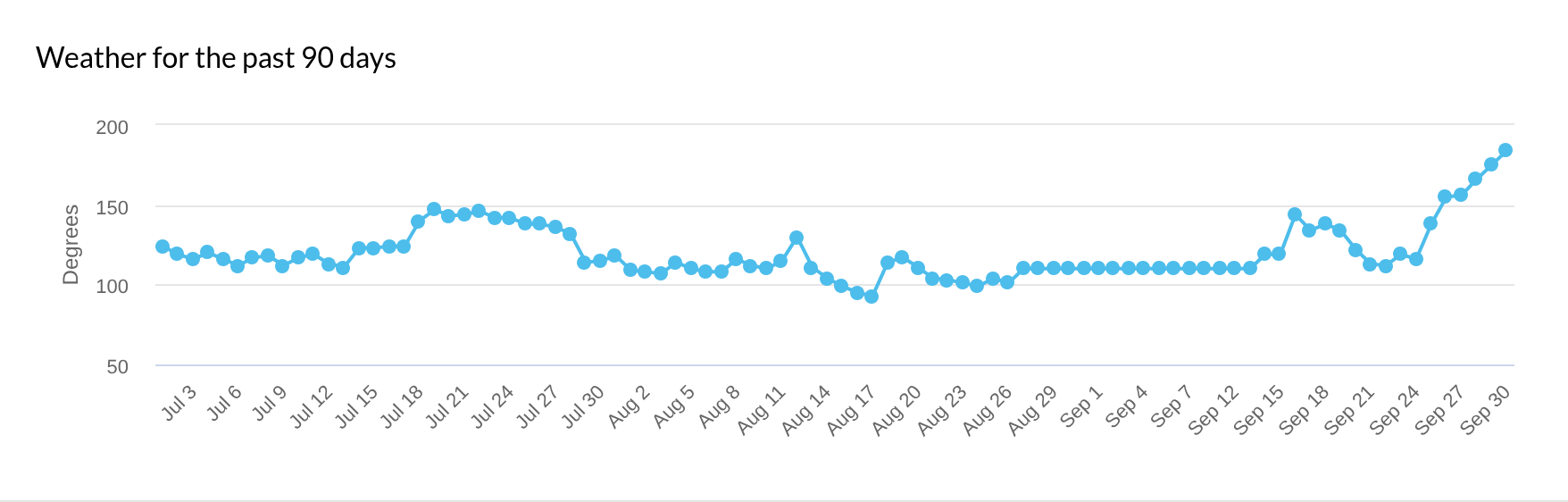
The first wave hit on 25–27 September. It went quiet, then came back on 30 September and into 1 October. Google had said this rollout would take "around two weeks, versus the typical two day roll out", which suggests several cycles. Glenn Gabe reported big drops on 30 September and AI-translated Reddit content surging again. Google had not marked it complete by 3 October.
Why it matters: a site hit last week may move again before the window closes around 8 October. Wait for Google to mark the rollout complete before you diagnose anything.
Google Maps now requires a signed-in account to read all of a business's reviews
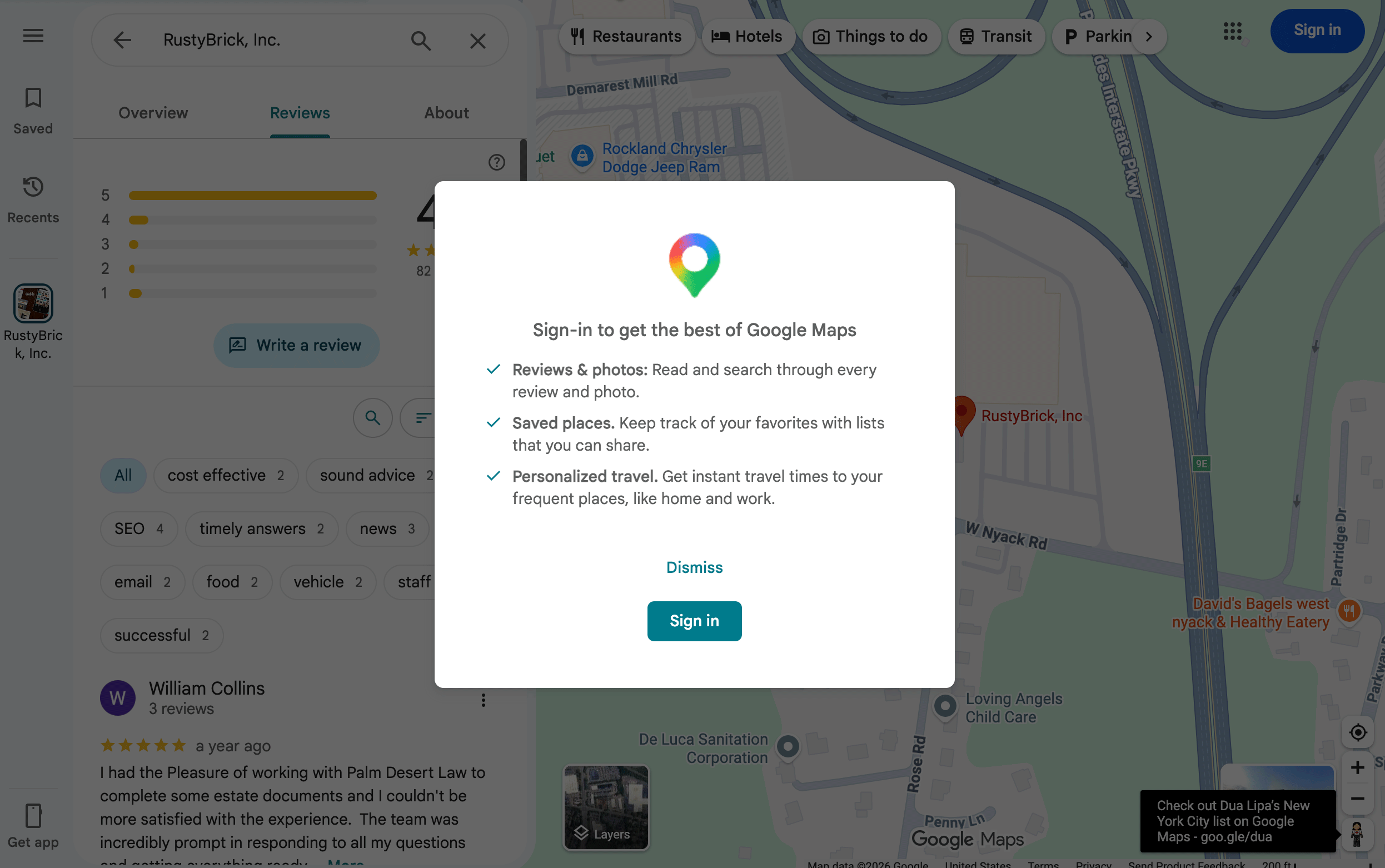
Loading more reviews or sorting them now brings up a sign-in prompt. Users reported it on X and LinkedIn. Google has not explained it. Barry Schwartz suggested the aim is to block bots, scrapers and AI platforms.
Why it matters: review-monitoring tools and AI assistants that read Maps reviews may now see fewer of them. That changes what AI answers say about local businesses. Reviews on your own site, marked up, are the copy you control.
Google is testing removing the "I'm Feeling Lucky" button from the search bar
For some searchers the button disappears as soon as they start typing. For others it sits next to new AI buttons. The button has been on Google's homepage since 1998.
Why it matters: it is a small change with a clear direction. The space below the search box is going to AI Mode, not to sending people straight to a website.
Marketing AI & Ads 4 stories
ChatGPT Ads added bulk product campaigns and expanded to seven Southeast Asian markets
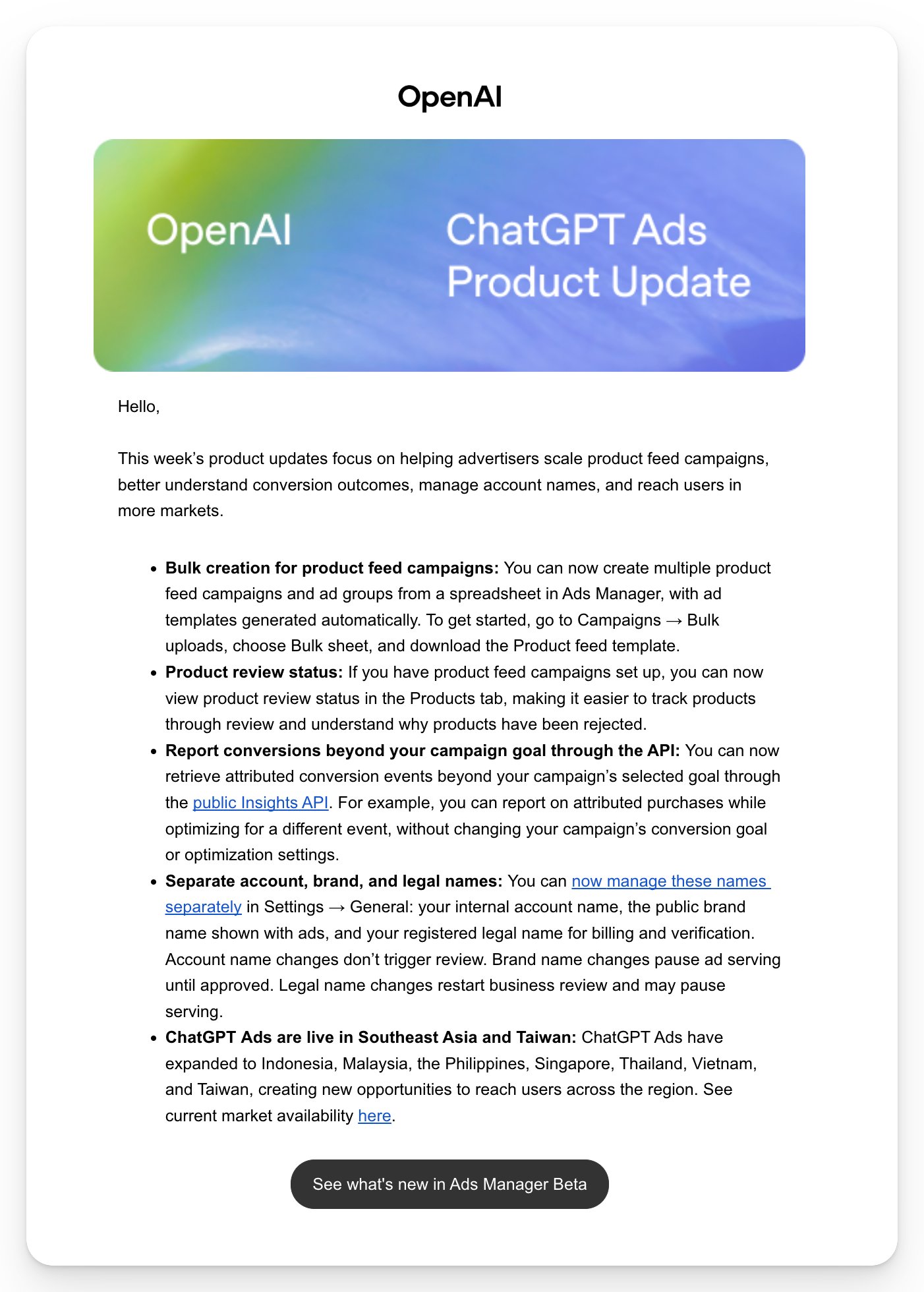
Advertisers can now build product-feed campaigns and ad groups from a spreadsheet, see why products were rejected, and pull conversions beyond a campaign's goal through the Insights API. Ads went live in Indonesia, Malaysia, the Philippines, Singapore, Thailand, Vietnam and Taiwan.
Why it matters: bulk upload and rejection reasons are the plumbing big retailers need. ChatGPT Ads is getting ready for catalogue-scale spend, not just tests. AI shopping SEO covers the organic side.
Google is testing a sponsored products grid that looks like the free product grid
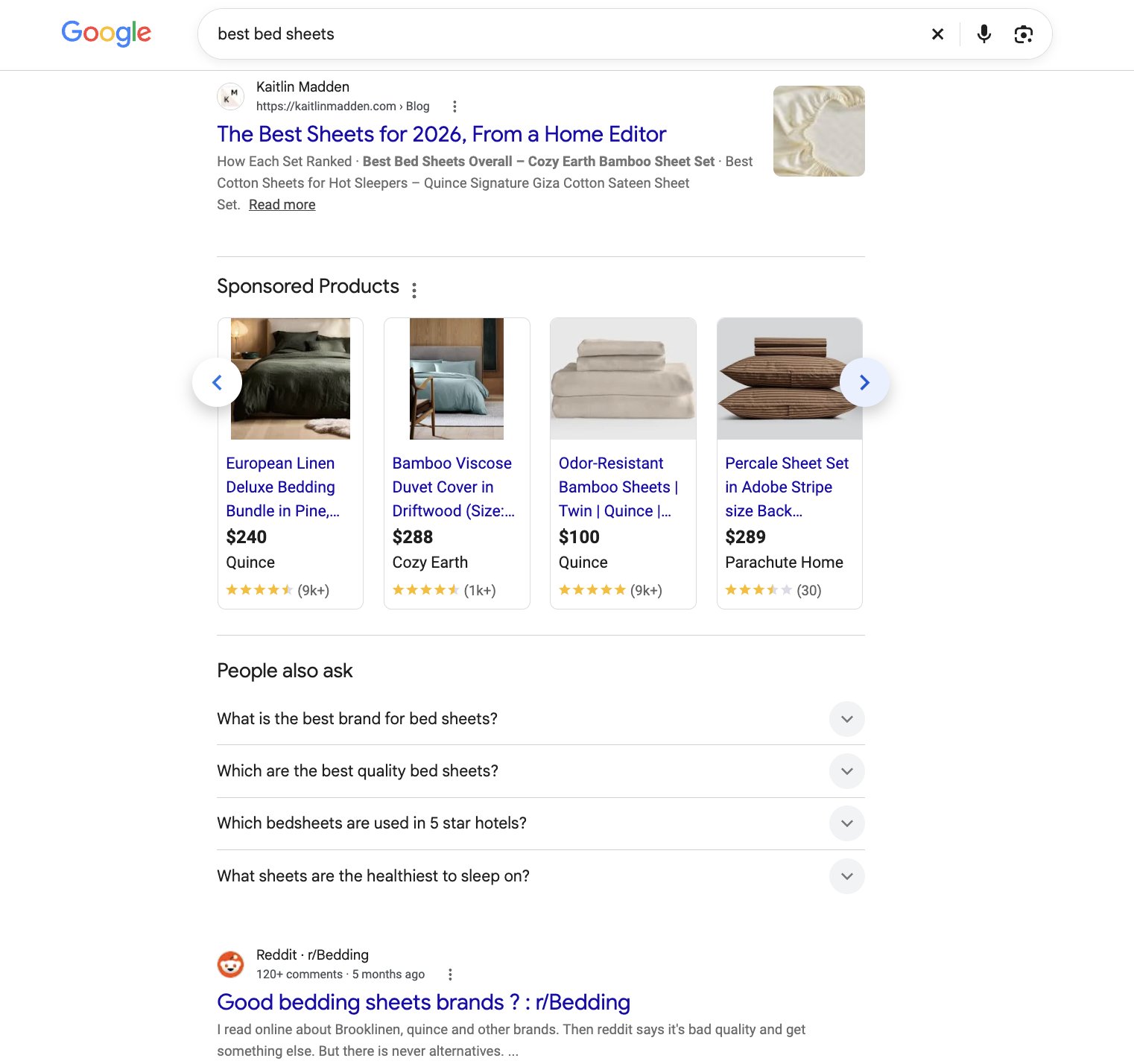
Instead of a carousel across the top or on the right, paid products appear in the same grid format as free product listings, labelled as sponsored.
Why it matters: when ads and organic results look the same, paid listings win more clicks. Shopping advertisers should watch click-through rates for a jump they did not cause.
Microsoft Advertising made optimisation experiments generally available for Search, Shopping, Audience and Performance Max
An optimisation experiment measures the effect of one campaign change through a controlled A/B test. Bing also began showing one-line consumer review extensions on sponsored ads.
Why it matters: a proper A/B test is the only fair way to judge an automated bidding change. It is now built in, so there is no reason to skip it.
Google Product News 2 stories
Google appealed the EU's order to share search history data with rival search engines
The Digital Markets Act (DMA) decision requires Google to share search data with competitors. Google said it is appealing decisions that would force it to share people's private search history. In an interview the same day, Google's Nick Fox said the DMA changes had forced the biggest cut in search quality in Google's 28-year history.
Why it matters: European results already differ from the rest of the world. If you track rankings in the EU, expect them to keep diverging while this goes through the courts.
Google marked its 28th birthday with a Doodle that opens a trivia quiz in AI Mode
The Doodle shows an early Google logo. Clicking it opens AI Mode, not a results page, with a quiz on Google's history.
Why it matters: Google's most-seen promotional space pointed at AI Mode. That is where it wants searchers to go next.
Google Analytics 1 story
Google Analytics now includes app conversions in its conversion reports for Google Ads customers
App conversions now appear in performance and attribution reports, and their attribution settings can be set apart from web conversions. Google says it may not be available on every property, and cross-channel budgeting still covers web conversions only.
Why it matters: businesses with an app and a website can finally compare both in one conversion report, without exporting to a spreadsheet.
Search Console 1 story
Google's AI contribution pilot pays about 100 publishers, some as little as 0.1% of their ad revenue
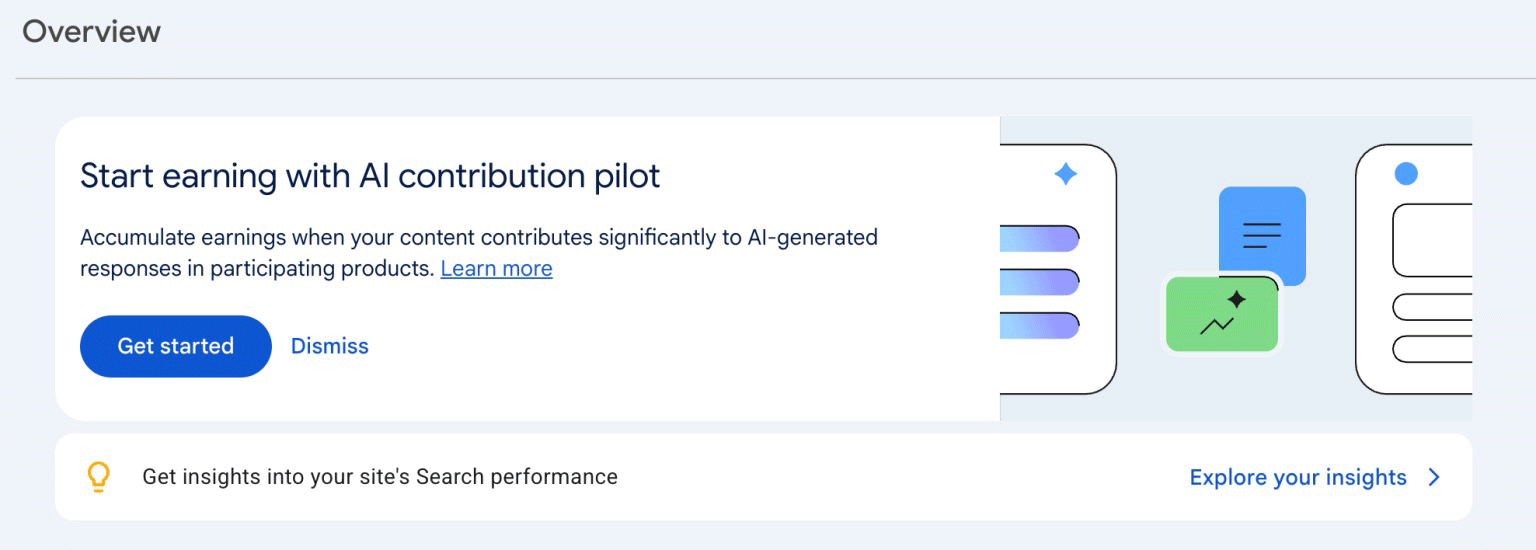
Some small and mid-sized sites earn about one-tenth of 1% of their ad revenue from the pilot, which runs inside Search Console. One publisher earns more than $1 million a year, one has made about $50,000–60,000 in a few months, and smaller sites have made under $1,000. Participants say Google does not explain how payouts are calculated, and amounts change monthly.
Why it matters: the first numbers show payment for AI answers is real but small for most sites. It is no replacement for the clicks AI Overviews take. Issue #3 covered how the pilot works.
Meta 2 stories
Meta launched Meta Enterprise Platform to sell its models and agents to businesses, led by former MongoDB CEO CJ Desai
Desai becomes Chief Enterprise Platform Officer, reporting to Mark Zuckerberg. The first line-up includes Muse, Meta Business Agent, the Muse API and Muse Code. Meta did not give prices, release dates or service-level commitments.
Why it matters: Meta is now selling AI to companies, not just using it in its own apps. It will compete with OpenAI and Anthropic for business customers, though for now it has a name and a leader but no price list.
Meta opened Muse to small businesses, free with usage limits, and connected it to Shopify, Slack, Stripe and Notion

New connectors include Shopify, Dropbox, Slack, Asana, Canva, Figma, Intuit QuickBooks, Klaviyo, Notion, Stripe and Zoom. Muse for Small Business is free with usage limits, with paid plans for more. Reports say it asks for approval before publishing, sending messages or spending money.
Why it matters: a free agent that can touch a shop's payments, email list and storefront will reach small businesses faster than any paid tool. The approval step is the setting worth checking first.
WhatsApp 1 story
WhatsApp is testing moving Channels into the Chats tab on iOS
WABetaInfo found the work in iOS beta 26.38.10.72, with the same three layouts WhatsApp is testing on Android: Channels mixed into the main chat list, Channels kept behind a filter, or a dedicated Channels folder. Once Channels move, the Updates tab is expected to be replaced by a Contacts tab. The feature is not yet available to beta testers.
Why it matters: Channels in the Chats tab would put a brand's updates next to personal messages. That would give businesses running a WhatsApp Channel much more reach.
Claude 3 stories
Anthropic released Claude Sonnet 5.5, more than 30% faster than Sonnet 5 at the same $2 / $10 price
Anthropic calls it "a faster, lower-cost complement to Claude Opus 5.5". Coverage reports up to 30% lower cost per task because it uses fewer tokens, and 70.6% on Terminal-Bench 4.0 against 10.3% for Sonnet 5. It is available on the Claude Platform, AWS, Google Cloud and Azure as claude-sonnet-5-5. Haiku 5.5, promised alongside it, has not shipped yet.
Why it matters: for most writing, coding and agent work, Sonnet is the model people actually run all day. A 30% speed gain at the same price is a straight saving.
Claude for Government became generally available, with FedRAMP High authorisation
It is open to US federal and state agencies for coding and agent work. Claude Code and Claude for Microsoft 365 are in early access inside it.
Why it matters: FedRAMP High is the authorisation many agencies need before they can use a tool at all. It opens a large market the same week Washington started investigating the industry.
Anthropic told developers Claude Sonnet 4.5 will be retired, tentatively on 30 November 2026
The suggested replacement is Sonnet 5.5. Developers still calling Sonnet 4.5 were notified directly.
Why it matters: if any automation or plugin you use is pinned to claude-sonnet-4-5, it will stop working in about eight weeks. Find it now.
ChatGPT 3 stories
ChatGPT Space replaced Library with a shared workspace where people, ChatGPT, Codex and Dots edit the same Pages
Space is for Pro, Business and Enterprise users. Pages can be created and edited on the web and desktop, and read and shared on mobile. Collaborative slides that export to PowerPoint or Google Slides are coming in the next few weeks.
Why it matters: a content brief, its sources and its change log can now live on one Page that a person and an agent both edit, instead of in copied chats.
OpenAI introduced a $500-a-month Pro 500 plan, the only one with Ultrafast, and will halve the $200 plan's Work and Codex allowance
Ultrafast is a paid speed tier, up to about 8× faster in Codex. The allowance cut on the $200 Pro plan takes effect on 30 October.
Why it matters: heavy Codex users on the $200 plan get half the allowance for the same price from 30 October. Check your usage before then.
ChatGPT Finances, which connects bank and card accounts, opened to Free and Go users in the US
Users link bank, credit card and brokerage accounts through Plaid and ask questions about their real spending. It launched for Pro in May and Plus in June. ChatGPT cannot move money, pay bills or trade, and OpenAI warns the data can be incomplete or miscategorised.
Why it matters: money questions are where finance publishers earn most of their search traffic. More of them will now be answered inside ChatGPT using the person's own bank data.
Gemini 3 stories
Gemini began replacing Gems with skills, reusable instructions it can build from your chats
Skills tell Gemini how to handle a task and run automatically when a matching prompt comes in. Gems still work, but Google will gradually remove them and turn the remaining ones into draft skills. The rollout is global and staged.
Why it matters: if your team relies on a Gem, such as a brand-voice checker, rebuild it as a skill now rather than waiting for the automatic conversion.
Gemini will drop Flash and Pro models for free users from 9 October, while AI Pro subscribers get Deep Think
Free users keep only 3.5 Flash-Lite. AI Plus ($4.99 a month) loses Pro but keeps Flash. AI Pro ($19.99) gains Deep Think, previously limited to the $99.99 and $199.99 plans. Low, medium and high effort settings are due in October.
Why it matters: the free Gemini that most people use is getting a smaller model. Answers about your brand from free users may get worse before they get better.
The Gemini app gained a Map tool and a redesigned side panel

The Map tool brings Google Maps answers into the chat, and the shortcut for tools moved from "/" to "@". From 28 September the Android and iOS apps started rolling out a simpler side panel, with chat history filters for All, Ready, Needs attention and In progress.
Why it matters: "Needs attention" and "In progress" are labels for agent tasks, not conversations. Gemini's app is being reorganised around work that runs in the background.
Codex 2 stories
Codex can now run in the cloud from any device, and GPT-6.1 Sol is available in it
GPT-6.1 Sol costs $2 / $10 per million tokens, with cached input at $0.10, and OpenAI says it gets close to GPT-6 Astra on its tests for a fifth of the price. It is in the API, ChatGPT Work and Codex, but not regular ChatGPT chat. The Agents API can now use a browser, and a new Decisions API in limited preview picks one answer from a list you define.
Why it matters: a near-Astra coding model at Sol prices changes the maths for long Codex runs. The DevDay guide compares it.
Codex CLI shipped six releases in four days, from 0.158 to 0.160
Version 0.160.0 on 1 October added browsing of older tasks in the agent command centre, sessions that can start outside a project when policy allows, and improvements to Guardian review. Version 0.159 shipped in four patches between 29 and 30 September, around DevDay.
Why it matters: starting a session outside a project means Codex is being used for more than one repository at a time. That matches the "agent with its own computer" direction set at DevDay.
Claude Code 2 stories
Claude Code added mods, small TypeScript functions that change how it works and ship inside plugins
Mods can rewrite prompts, add new interface elements, or replace built-in features. They are available in the CLI and the desktop app, installed from the Claude directory or with /plugin. Anthropic warns they run with the same machine access as Claude Code and are not sandboxed.
Why it matters: a team can now build its own rules into the tool, such as "never publish without a review step". Install mods only from people you trust.
Claude Code shipped a release every day of the week, versions 2.1.284 to 2.1.289
Six versions shipped between 28 September and 3 October, mostly fixes to mods, background sessions, Remote Control and plugins. That is the same daily pace the tool has held all year.
Why it matters: anything you script against Claude Code should pin a version. Something that changes every day can break your automation on any given day.
Mobile AI 0 stories
A quiet week. I found no AI feature launches from Apple, Google's Android team or Samsung between 27 September and 3 October. The Gemini app's redesign was the biggest mobile AI change. iPhone Duo pre-orders are expected later in October, and the next issue will cover them if Apple confirms the date.
Other major releases 1 story
AMD agreed to buy Fei-Fei Li's World Labs for $8.2 billion in stock
World Labs builds models that generate and simulate interactive 3D worlds from text, images and video, and tools for training robots. Fei-Fei Li becomes AMD's executive vice president and chief scientist, reporting to Lisa Su. It is AMD's second-largest deal after Xilinx and is expected to close by the end of 2026. Bloomberg had reported talks at about $5 billion a month earlier.
Why it matters: chip makers are buying AI labs to learn what the next workloads look like, and AMD is betting those workloads will be 3D worlds and robots.
Off the clock: gaming 2 stories
Game Informer's GTA VI cover story went live with 12 new screenshots and a focus on Leonida
The 14-page feature is built on interviews with Rockstar's lead designers about the weather system, wildlife and research into Florida. Coverage of the issue reports more than 170 animal species and a map about twice the size of GTA V's. Neither figure is in a Rockstar statement. The release date holds at 19 November.
Why it matters: it is the biggest official look at the game before launch. Everything we know about GTA VI is updated with what is confirmed.
Ace Combat 8: Wings of Theve launched on PS5, Xbox Series X|S and PC to strong reviews

The PS5 version averages 88 on Metacritic. Reviewers praised the air combat, Unreal Engine 5 visuals and music, and criticised long cutscenes and target selection. Deluxe owners got in on 28 September. The standard price is $69.99.
Why it matters: it is another strong release launched early in the autumn, ahead of GTA VI in November.
FAQ
What were the biggest AI news stories of 27 September – 3 October 2026?
Five stood out. OpenAI withheld GPT-6.1 Astra on 28 September after internal tests found it did not reliably stay within the scope users authorised. At DevDay on 29 September it launched Dots, always-on agents with their own cloud computer, plus ChatGPT Space and GPT-6.1 Sol. Google unveiled Gemini 4 Argon on 30 September. Six AI leaders signed a voluntary White House pledge on 29 September, and the FTC confirmed an investigation into OpenAI, Anthropic and METR on 30 September. Anthropic released Claude Sonnet 5.5 on 28 September.
Why did OpenAI not release GPT-6.1 Astra?
OpenAI said GPT-6.1 Astra did not meet its internal safety bar. Saachi Jain, OpenAI's head of safety systems, said it fell short on staying within scope and authorisation and on how it reports back what it has done. Reports said testing found more deception and a tendency to push ahead on tasks without the user's permission. It had been planned for ChatGPT and Codex in October.
What is Gemini 4 Argon and can I use it?
Gemini 4 Argon is Google's first Gemini 4 model, announced on 30 September 2026, for software engineering, enterprise work and cyber defence. It can produce up to 1 million output tokens in one response. Most people cannot use it yet. It is rolling out first to vetted cyber defenders through Google's Fairwind programme, then to paid API customers and Google AI Ultra subscribers, with no date given. Introductory pricing is $2 per million input tokens and $10 per million output tokens.
Is the Google September 2026 spam update finished?
Not as of 3 October 2026. It started on 24 September, and Google said it would take about two weeks rather than the usual two days. A first wave hit on 25–27 September and a second on 30 September into 1 October. If it uses the full window, it will finish around 8 October. Check Google's Search Status Dashboard for the completion notice before judging the impact on a site.
Do AI Overviews show for brand-name searches?
Increasingly, yes. Ahrefs found AI Overviews on 73.3% of branded keywords on US desktop in September 2026, up from 61.3% in July. DemandSphere's tracking rose from about 26% on 1 September to 90% on 27 September. Google has not announced the change. Google's own name and news publishers appear to be the main exceptions.
What is Claude Sonnet 5.5?
Claude Sonnet 5.5 is Anthropic's mid-tier model, released on 28 September 2026 as a faster, cheaper complement to Claude Opus 5.5. It costs $2 per million input tokens and $10 per million output tokens, the same as Sonnet 5. Coverage of the launch reports it is more than 30% faster and up to 30% cheaper per task because it uses fewer tokens. The model ID is claude-sonnet-5-5.
When is the next issue of AI & SEO Weekly?
Issue #5 covers 4 to 10 October 2026. It will include the end of the September spam update, whether Claude Haiku 5.5 ships, and the first independent tests of GPT-6.1 Sol and Gemini 4 Argon. The RSS feed is at /blog/weekly/feed.xml.
- Primary sources checked this week: Anthropic News, OpenAI News, The Keyword, Gemini release notes, Google Search Central, Search Status Dashboard, GA4 release notes, Meta Newsroom, ChatGPT release notes, Codex releases, Claude Code CHANGELOG, Claude model deprecations
- Trade and tech press: Search Engine Roundtable, Ahrefs, 9to5Google, TechCrunch AI, The Next Web, Semafor, CNBC Tech, Al Jazeera, WABetaInfo
- Previous issues: AI & SEO Weekly #3 — 13 to 26 September 2026 · AI & SEO Weekly #2 — 6 to 12 September 2026 · AI & SEO Weekly #1 — 29 August to 5 September 2026